
Payload
Weight, dimensions, centre of gravity, fragility, securing method and release requirements.
Move more, carry specialized payloads and reach work sites conventional access cannot.
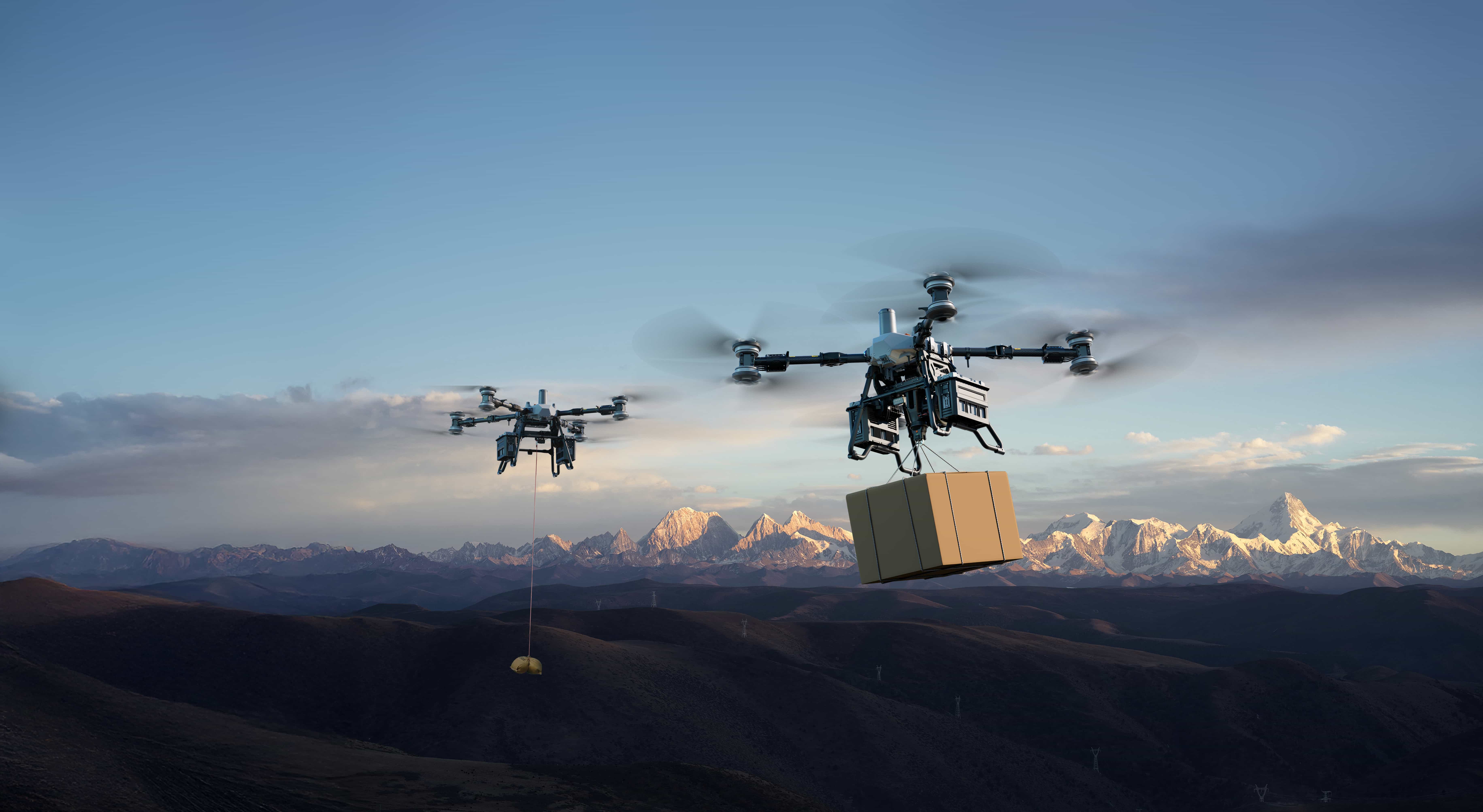
Heavy-lift drones range from modular sensor carriers to industrial cargo aircraft capable of moving tools, materials and equipment. The right system depends on the actual operating weight, payload shape, route, release method, terrain, weather, reserves, regulatory pathway and ground workflow—not the headline lift number alone.
Weight, dimensions, centre of gravity, fragility, securing method and release requirements.
Distance, elevation change, obstacles, landing areas, alternates and communication coverage.
Temperature, altitude, wind, precipitation, terrain, dust and operating-site access.
Crew roles, load zones, battery turnaround, emergency plans, approvals and lifecycle support.
The payload defines the aircraft, attachment method and operating plan.
A compact LiDAR sensor, a crate of tools and a suspended utility component may have similar weights but require completely different aircraft, mounting systems, route controls and ground procedures.
Protect tools, medical supplies, samples, parts and other contained loads during point-to-point transport.
Explore Cargo DeliveryLower and recover loads where landing is unsafe or impossible, while maintaining controlled vertical separation.
Discuss the MissionCarry awkward or oversized material beneath the aircraft using an engineered hook, sling and load-control procedure.
Review IntegrationLift LiDAR, high-resolution cameras, gas sensors, radar or scientific payloads that exceed compact aircraft limits.
Explore LiDARDeploy specialty equipment, cable, rope, communications hardware or other mission-specific tools.
Plan a Custom SystemSupport forestry, utilities, construction, mining, emergency response and isolated field teams.
Explore Remote LogisticsFrom specialty sensor carriers to 200 kg-class cargo aircraft.
Payload figures represent manufacturer maximums under defined configurations or test conditions. Actual mission capacity must include batteries, mounting hardware, cargo equipment, reserves, altitude, temperature, wind and the required route.

A foldable industrial delivery platform built for cargo and winch operations, supporting up to 30 kg in dual-battery mode and 40 kg in single-battery configuration.
DJI’s next-generation heavy cargo platform supports up to 85 kg in dual-battery mode and up to 100 kg in a single-battery configuration.
DJI’s ultra-heavy delivery platform supports a 200 kg single-aircraft payload and coordinated multi-aircraft lifting for larger industrial cargo missions.

A folding heavy-lift aircraft designed for LiDAR, cinema systems, large sensors and custom payload integration, with a 15.1 kg maximum payload.

An American-built hexacopter designed for LiDAR, EO/IR, survey and advanced industrial payloads, with a listed maximum payload of 19.1 lb.

A configurable six-rotor platform with up to 6 kg payload capacity, open-source flight controls and a spacious bay for custom integrations.
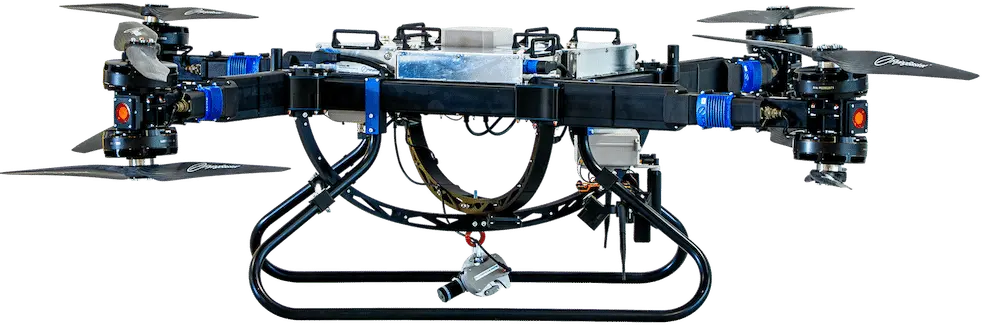
A European industrial cargo aircraft designed to transport up to 100 kg using sling or cargo-box configurations for demanding logistics operations.
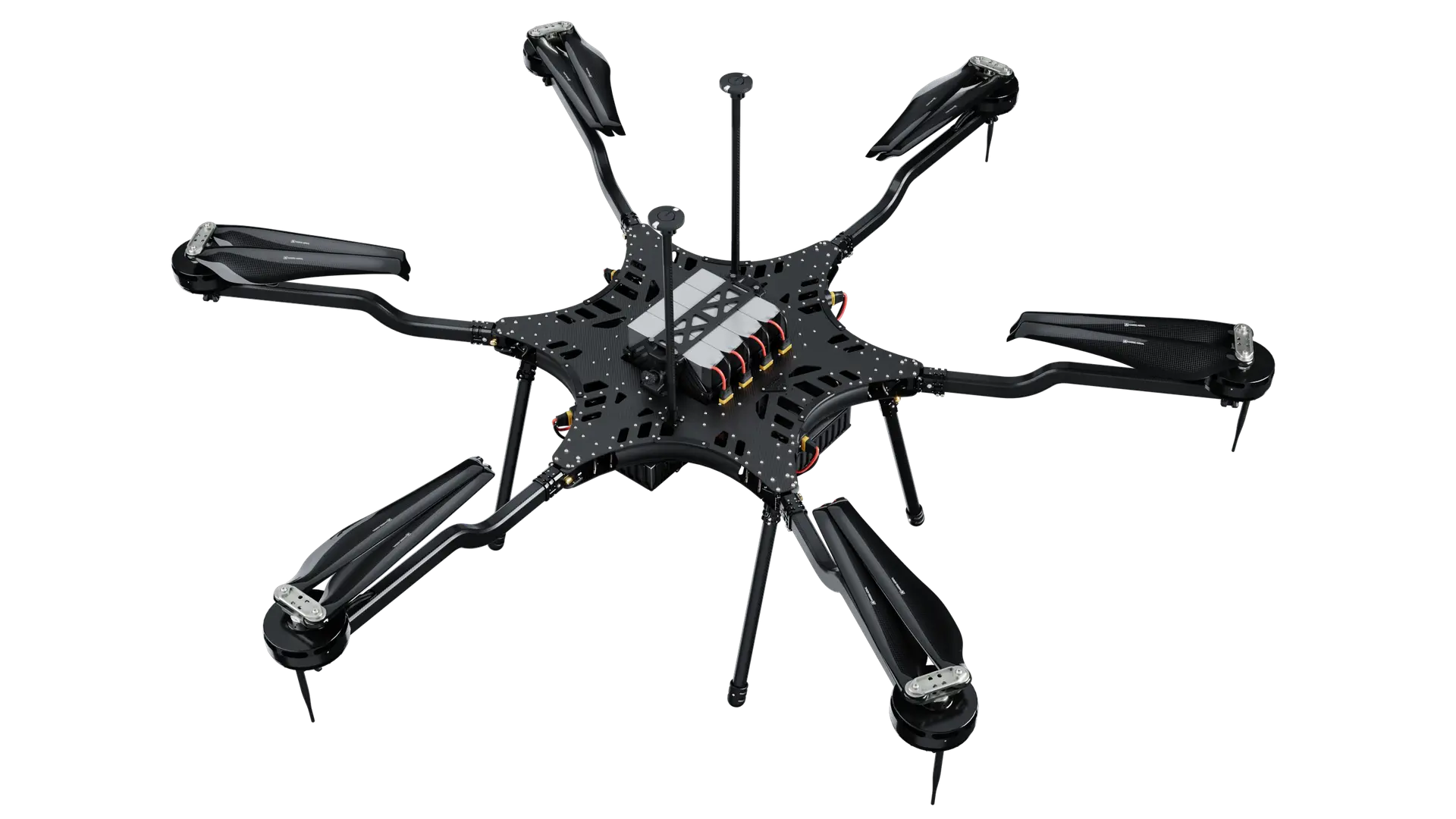
A U.S.-made foldable heavy-lift hexacopter supporting up to 40 kg through a universal quick-release interface for industrial and scientific payloads.
Usable capacity changes with battery configuration, mounting equipment, altitude, temperature, wind, route distance, required reserves and the operating approval.
How the payload is attached can matter as much as how much it weighs.
The load method changes aircraft behaviour, crew responsibilities, ground-zone controls and the type of release or recovery process required.
Best for sensors and mission equipment that must remain rigidly mounted, powered and connected to the aircraft.
Protects smaller items and simplifies handling, but the container and attachment hardware consume payload capacity.
Allows placement without landing and can support controlled lowering, recovery and touchdown release.
Supports larger or awkward loads but introduces load swing, clearance, hook, rigging and ground-control requirements.
Match the platform family to the operating problem.
The platform should be selected after the working payload, route, environment, load method and approval pathway are understood.
| Operational Need | Typical Payload | Platform Direction | Questions to Confirm |
|---|---|---|---|
| Specialty Sensor Integration | LiDAR, radar, high-resolution camera, gas sensor or scientific instrument | Open modular aircraft such as Alta X Gen2, IF1200, Aurelia X6 MAX or Carrier H6HL | Payload weight, power, data interface, vibration, mounting, centre of gravity and deliverable |
| Remote Worksite Resupply | Tools, PPE, food, parts, batteries and small equipment | FlyCart 30 or another medium cargo platform | Route length, landing access, winch need, turnaround, weather and crew at each end |
| High-Capacity Industrial Logistics | Utility components, construction material, telecom hardware or heavy equipment | FlyCart 100, FlyCart 200 or FlyingBasket FB3 class | Actual working payload, operating weight, route, site control, approvals and transport logistics |
| External or Awkward Loads | Cable, rope, long components, suspended equipment or custom rigging | Aircraft with engineered hook, sling or winch integration | Swing control, rigging certification, hook release, clearance, emergency jettison and ground zones |
| Repeated A-B Delivery | Standardized cargo moving between known sites | Delivery ecosystem with route management and fleet workflow | Volume, frequency, battery cycle, alternate sites, communications and operating economics |
Heavy lift needs a complete operating system—not only an aircraft.
A structured process helps expose payload, route, crew, infrastructure and approval issues before equipment is purchased.
Record the working weight, dimensions, centre of gravity, sensitivity and handling requirements.
Review distance, elevation, weather, obstacles, communications, launch areas and alternates.
Compare aircraft, load hardware, batteries, charging, software, transport and support.
Complete testing, documentation, procedures, crew preparation and regulatory work.
Configure, train, maintain, monitor performance and expand the program as requirements grow.
Aircraft weight, payload and mission complexity affect the approval pathway.
Heavy-lift operations may involve medium or large RPAS, complex site controls, external loads, cargo transport, BVLOS or operations beyond standard privileges. Confirm the current Transport Canada category, aircraft declaration status, pilot and operator requirements, airspace permissions and whether an SFOC-RPAS is required before committing to a system.
Key questions before purchasing a heavy-lift platform.
The working payload depends on the exact aircraft and battery configuration, mounting or cargo hardware, altitude, temperature, wind, route distance and reserve requirement. The manufacturer’s maximum is not automatically the usable payload for every mission.
A sensor carrier is optimized to rigidly mount, power and communicate with imaging or scientific equipment. A cargo drone is designed around moving and releasing loads through a box, winch, hook or sling workflow.
For some repeatable loads and remote routes, a drone can reduce mobilization, crew exposure and cost. It does not replace a helicopter in every payload, range, weather or regulatory scenario. A route and economics study is needed.
Possibly. The requirements depend on operating weight, airspace, aircraft status, mission type and whether the operation fits within Advanced or Level 1 Complex privileges. Operations outside those privileges may require an SFOC-RPAS.
Yes. The review can include payload weight and dimensions, mounting, power, data connections, centre of gravity, vibration, operating workflow, testing, training and support planning.
The FlyCart 200 has been announced by DJI in China. Canadian availability, supported configurations, pricing, service coverage and regulatory suitability should be confirmed before it is quoted or included in a deployment plan.
Depending on platform availability and the project, a demonstration, rental, payload-fit review or structured proof of concept may be used before full deployment.
Share the payload, route, operating environment, required frequency and deployment timeline. We will help narrow the platform, load method, support equipment and operating pathway.
