
Mission
Define the inspection, response, mapping or monitoring result the dock must deliver.
Keep aircraft mission-ready, automate repeatable flights and manage remote sites from one connected workflow.
A drone dock is more than a charging box. It is field infrastructure that connects an aircraft, protected storage, charging, weather monitoring, network access, mission software, remote supervision and an approved operating concept. The right system depends on the task frequency, coverage area, sensor, site conditions, connectivity, data workflow and Canadian authorization.

Define the inspection, response, mapping or monitoring result the dock must deliver.
Confirm coverage, obstacles, weather, security, mounting and safe launch conditions.
Plan reliable power, network bandwidth, backup systems, data storage and maintenance access.
Establish pilot authority, remote supervision, airspace, procedures, approvals and contingencies.
A dock creates value when readiness, repeatability or response time matters.
Before choosing hardware, define how often the aircraft should fly, what information it must collect, who will supervise it and what action the data should trigger.
Schedule repeatable visual, thermal and zoom inspections for utilities, energy facilities, rooftops, plants and critical assets.
Explore Enterprise SystemsCapture routine progress imagery, stockpile records, site maps and operational documentation from a consistent launch point.
Explore Site IntelligencePre-position an aircraft for remote response, scene awareness and live command support within an approved operating program.
Explore Public SafetySupport authorized patrols, alarm verification, perimeter awareness and repeatable checks over defined facilities.
Discuss the WorkflowRepeat routes over forests, shorelines, restoration sites and remote areas to document change over time.
Explore Environmental WorkEvaluate connected base stations and long-endurance aircraft for roads, pipelines, powerlines and distributed assets.
Request a Coverage ReviewCompare compact fixed sites, vehicle-deployable systems and alternative remote-operation ecosystems.
Published specifications describe controlled test conditions. Actual coverage, response time and mission availability depend on the aircraft configuration, terrain, radio environment, network, weather, airspace, maintenance state and operating approval.

DJI’s current remote-operation platform for Matrice 4D or 4TD, supporting fixed installation and vehicle-mounted deployment for inspection, monitoring and rapid response.

A compact fixed-site dock for Matrice 3D or 3TD, designed for scheduled mapping, inspection and thermal monitoring through the DJI remote-operations ecosystem.

A remote-response and inspection ecosystem built around the Skydio X10, onboard autonomy, connected fleet software and rapid launch workflows.
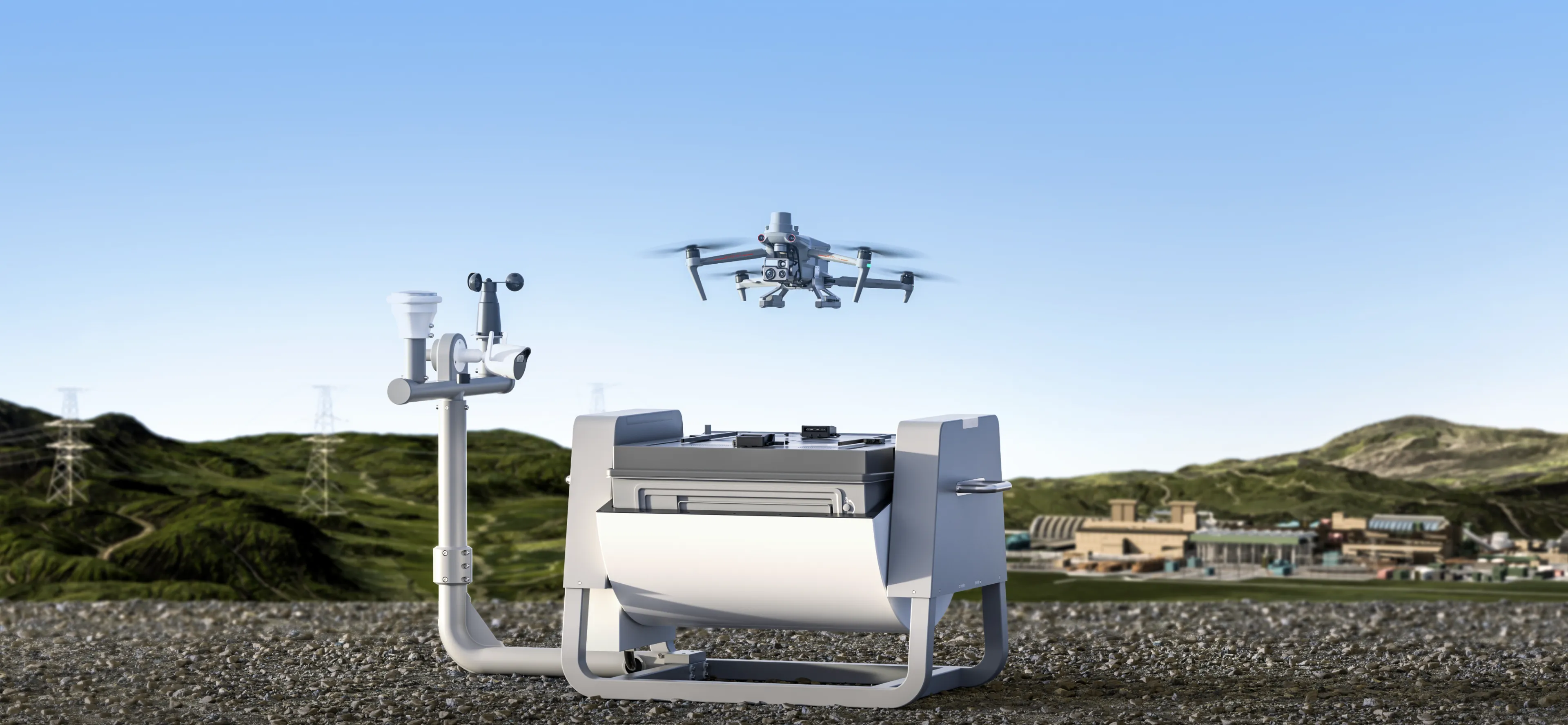
A transportable remote-operations base for the EVO Max Series, combining protected storage, environmental monitoring, charging and Autel command software.

An industrial drone-in-a-box pathway combining Percepto Air aircraft, protected docking, remote connectivity and AIM inspection analytics.
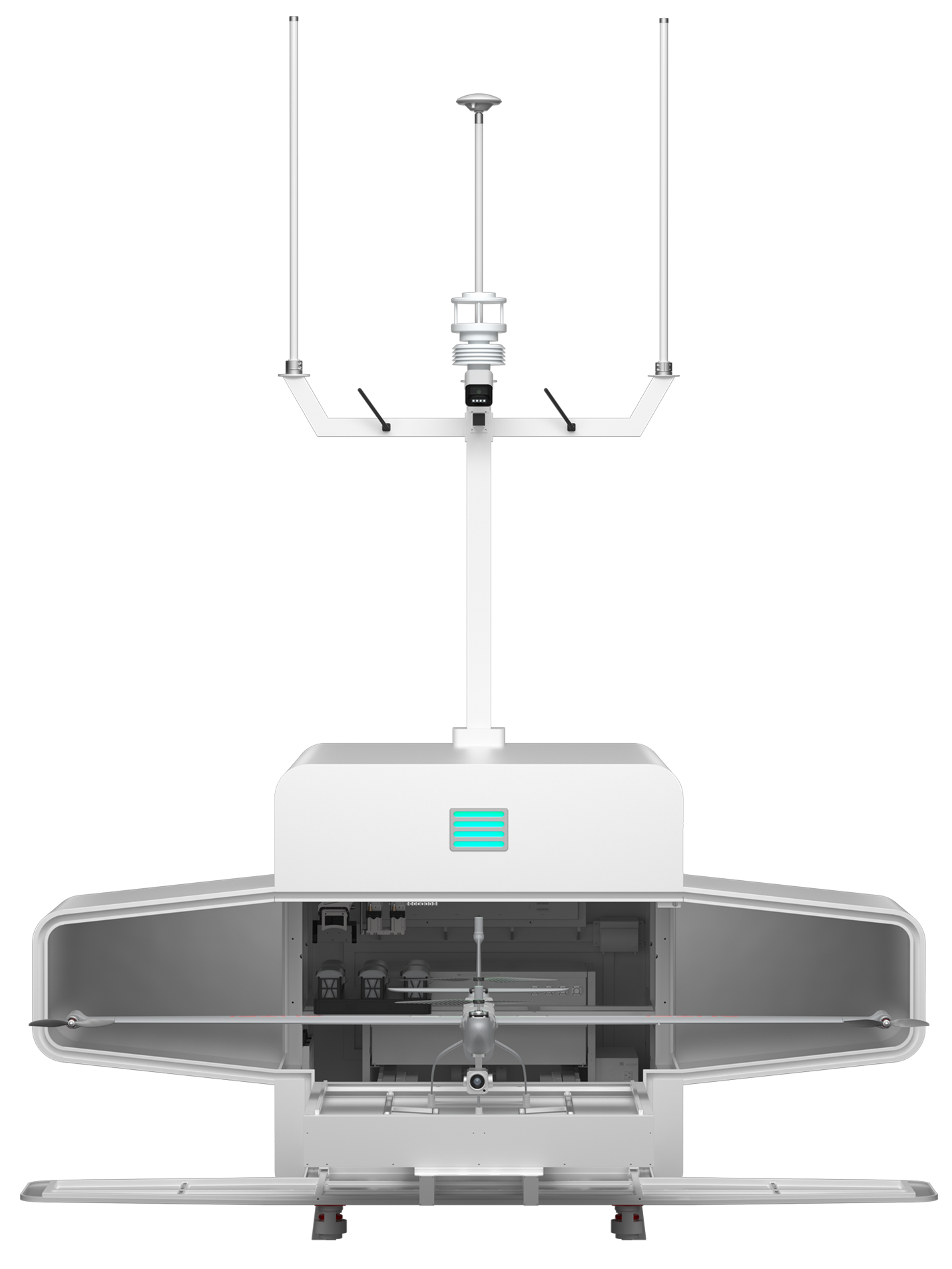
An unattended eVTOL support system with automated takeoff, landing and battery swapping for large-area and long-corridor inspection programs.
The aircraft, dock and software must operate inside an approved concept of operations with qualified people, airspace procedures, communications, weather limits, maintenance controls, privacy rules and the correct Canadian authorization.
The dock only creates value when every layer works together.
Reliable remote operation connects the field site to the aircraft, control software, communications, operator, data users and maintenance plan.
Match protection, charging, sensor capability, flight performance and aircraft compatibility to the site.
Design primary and backup power, network bandwidth, cellular or satellite backhaul and outage procedures.
Plan routes, remote control, alerting, live video, user roles, data storage and third-party integrations.
Define remote-pilot responsibilities, launch authority, monitoring, escalation and emergency response.
Schedule site visits, cleaning, batteries, firmware, aircraft inspection, spares and technical support.

Match the ecosystem to the operating problem—not the specification sheet alone.
Use this as an initial filter. Final selection should consider actual site coverage, required sensor, environmental limits, data policy, integration requirements, support and Canadian operating authority.
| Operational Need | Likely System Direction | Useful Strength | Questions to Confirm |
|---|---|---|---|
| Current DJI fixed or mobile deployment | DJI Dock 3 with Matrice 4D or 4TD | Current DJI dock ecosystem, fixed or vehicle-mounted operation and FlightHub 2 workflow | Mapping versus thermal mission, mounting approach, coverage, network, D-RTK requirements and approvals |
| Compact recurring mapping or inspection site | DJI Dock 2 with Matrice 3D or 3TD | Compact footprint and established fixed-site mapping or thermal workflow | Lifecycle horizon, aircraft fit, sensor requirements, operating radius and software licensing |
| Rapid public-safety or incident response | Dock 3 + Matrice 4TD or Skydio Dock for X10 | Fast remote launch, visual and thermal awareness and command-software integration | Dispatch integration, response coverage, airspace, BVLOS authority, staffing, privacy and evidence controls |
| Industrial inspection and automated analytics | DJI, Percepto or another site-specific industrial ecosystem | Repeatable collection linked to inspection reports, change detection or asset analytics | Required sensor, analytics, data ownership, ERP or asset-system integration and maintenance service |
| Alternative multi-rotor ecosystem | Autel EVO Nest with compatible EVO Max aircraft | Transportable remote-operation infrastructure and Autel command workflow | Canadian availability, supported aircraft, data policy, service coverage and regulatory suitability |
| Long corridor or large remote area | Dragonfish Nest or another long-endurance networked system | eVTOL endurance, battery-swap workflow and distributed-base coverage | Airspace, communications, alternate landing, weather, detect-and-avoid, BVLOS approval and field service |
Prove one dependable workflow before scaling to multiple docks.
A phased deployment exposes coverage, connectivity, staffing, data and approval issues before the organization commits to a larger fleet.
Define the trigger, route, sensor, deliverable, response time, flight frequency and success criteria.
Review terrain, obstacles, airspace, weather, radio environment, mounting, security and safe contingencies.
Select the dock, aircraft, software, power, network, data architecture and support configuration.
Install, configure, train, test representative missions and document exceptions or operator interventions.
Measure readiness, data value, reliability and operating cost before expanding routes, sites or fleet size.
Remote operation depends on infrastructure that remains reliable when nobody is standing beside it.
A site-readiness plan should document both normal operation and what happens when power, network, weather, aircraft or software conditions fall outside the approved limits.
Confirm service capacity, grounding, surge protection, backup power, safe shutdown and cold-weather demand.
Validate upload speed, latency, cellular or satellite backup, firewall rules, remote access and outage response.
Plan foundation, drainage, clearance, security, access, snow, vegetation, nearby structures and maintenance space.
Document wind, precipitation, icing, heat, dust, salt, wildlife, visibility and conditions that suspend missions.
Dock hardware does not determine which flight privileges apply.
Remote dock operations can involve Advanced, Level 1 Complex or Special operating requirements depending on the aircraft, airspace, population density, distance from people, visual-line-of-sight model and concept of operations. Lower-risk BVLOS under Level 1 Complex is limited to defined conditions and requires the appropriate pilot certificate, RPAS Operator Certificate and eligible safety declarations. Other operations may require an SFOC-RPAS.
Important questions before purchasing or installing a drone dock.
A drone dock protects and charges a compatible aircraft while connecting it to power, communications and mission software. Depending on the system, it can support remote preflight checks, scheduled routes, live control, data upload, weather monitoring and fleet management.
The system can automate many technical tasks, but the operation still requires an approved concept of operations, qualified personnel, monitoring, airspace procedures, weather limits, maintenance and contingency plans. The permitted level of automation depends on the mission and authorization.
Dock 3 is the newer system for Matrice 4D or 4TD and supports fixed or vehicle-mounted deployment. Dock 2 is a compact fixed-site system for Matrice 3D or 3TD. The right choice depends on sensor needs, deployment model, lifecycle, site and budget.
Remote supervision, live video, mission control and data transfer generally depend on a reliable network connection. Required bandwidth and fallback behaviour vary by ecosystem. Connectivity should be tested at the exact site, with a documented backup and outage procedure.
A solar-backed design may be possible for some sites, but it must support aircraft charging, dock heating or cooling, communications and seasonal conditions with appropriate reserves. A power-load and reliability study is required before installation.
Not every dock flight is automatically BVLOS, but many remote-operation concepts are. The applicable pathway depends on where the pilot is located, how the aircraft is observed, the airspace, population, aircraft declaration and mission. Level 1 Complex privileges apply only to defined lower-risk BVLOS operations; other missions may require an SFOC-RPAS.
Budget beyond the dock and aircraft. A complete project can include site work, electrical service, network hardware, software licensing, cloud storage, installation, training, regulatory preparation, spare aircraft or batteries, maintenance, protection plans and ongoing support.
Yes. A project review can cover the mission, proposed location, coverage, power, connectivity, aircraft and sensor requirements, software, data workflow, Canadian operating pathway, installation, training and lifecycle support.
Share the site, coverage area, required sensor, mission frequency, response objective, connectivity and deployment timeline. We will help narrow the dock ecosystem and build a practical Canadian operating path.
